El lince ibérico
The Iberian Lynx
Tap any word to see its meaning. Tap the small “en” after a sentence, or select the sentence, to see its translation.
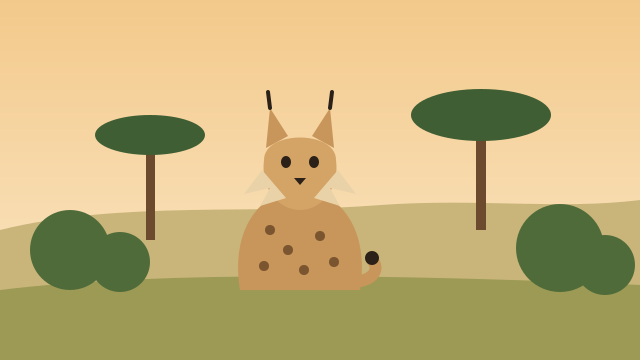
El lince ibérico es un gato salvaje. Vive en España y en Portugal. No vive en otros países. Tiene las patas largas y la cola corta. En las orejas tiene pelos negros. Y en la cara tiene una barba de pelo.
El lince come conejos. Un lince adulto necesita un conejo cada día. Vive en el bosque, entre árboles y plantas bajas.
En el año 2002 hay menos de cien linces. Es uno de los animales más raros de Europa. Pero muchas personas quieren salvar al lince. Los científicos tienen centros especiales para los linces. Allí nacen muchos linces pequeños. Después, los linces pueden vivir libres en el campo. En el año 2025 hay 2.663 linces.
¿Qué va a pasar ahora? Los científicos van a llevar linces a lugares nuevos. Pero las carreteras son un peligro. Muchos linces mueren bajo los coches. Por eso hay pasos especiales para animales bajo las carreteras.
¿Quieres ver un lince? Vas a necesitar paciencia. Es un animal muy tímido. Pero un día, tal vez, vas a ver sus ojos entre los árboles.
The facts: The Iberian lynx lives only in Spain and Portugal and feeds mainly on rabbits. In 2002 fewer than one hundred were left; thanks to breeding centres and releases into the wild, the 2025 census counted 2,663. Cars on the roads are one of its main dangers.